30/12/2025
The Year-End Member Meeting organized by the Turkish Corporate Governance Association (TKYD) was held at the Istanbul Chamber of Industry. During the meeting, a collaboration protocol was signed between TKYD and the Sabancı University Corporate Governance Forum. The Corporate Governance Evaluation Report prepared by Sabancı Business School faculty members Dr. Ozan Duygulu and Dr. Tevhide Altekin was also shared with the public.
The collaboration, signed by TKYD Chair Dr. Tamer Saka and Sabancı Business School Dean Prof. Dr. Ayşegül Toker, aims to develop research that combines academic knowledge with the needs of the business world and to strengthen the corporate governance culture.
Current State of Corporate Governance Revealed
The Corporate Governance Evaluation Report, prepared in collaboration between Sabancı University and TKYD (Turkish Corporate Governance Association), sheds light on the current state of corporate governance practices in Türkiye. The report is structured under four main headings: shareholders, public disclosure and transparency, stakeholders, and the board of directors. The analysis, conducted across a total of 68 principles, uses 2024 data as a basis for comparisons with previous years.
A heat map (color map) method was used in the study to make compliance levels more visible. This approach aims to clearly reveal the areas where companies are strong and the areas open to improvement.
Transparency is a Strength while Board of Directors is the Most Challenging Area
According to the report, public disclosure and transparency stand out as one of the areas with the highest compliance, largely due to the alignment with regulatory arrangements. In the shareholders section, the compliance rate regarding the creation of general assembly agendas has strikingly increased from 72% to 100%. In contrast, the board of directors section stands out as the area where compliance is most challenging, due to differences in directors' liability insurance, job descriptions, and implementation.
Increase in Women's Representation on Boards of Directors
The report also reveals current data on women's representation on boards of directors. According to this, 19% of the board members in BIST 100 companies are women. The decrease in the rate of boards with no female members from 26% to 20% and the increase in the rate of companies with more than three female members from 10% to 28% are considered important steps forward in terms of diversity.
“We Must Accept and Manage Uncertainty”
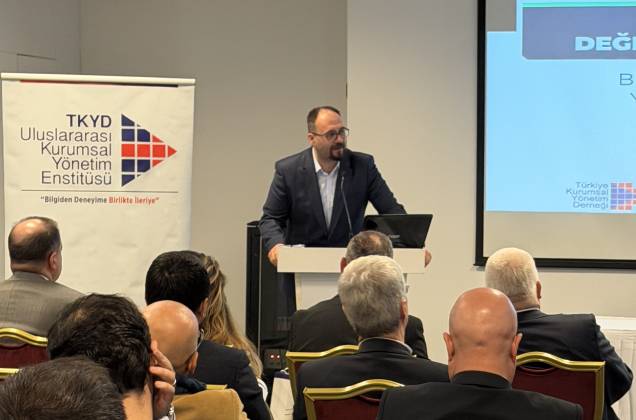
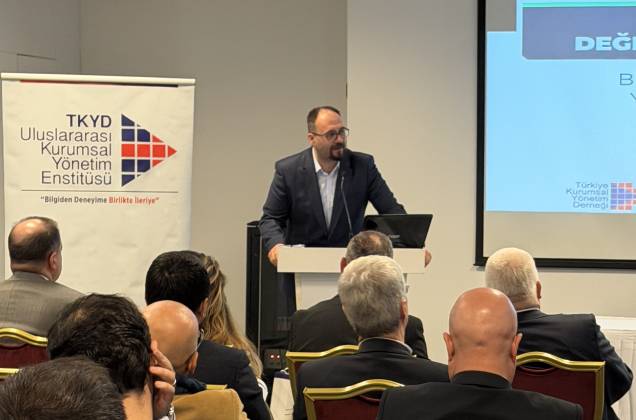
Commenting on the general framework of the report, Dr. Ozan Duygulu drew attention to the structural uncertainties of the current period and said: “We are in a period where we do not expect uncertainties to decrease. We are facing a multi-crisis environment in many areas, from geopolitical developments to the business world. At Sabancı University, we place the need to accept and manage uncertainty at the center of our sustainable corporate governance studies.”
Dr. Ozan Duygulu emphasized that the main purpose of the study is to transparently monitor the compliance levels of companies and to improve the quality of disclosure.
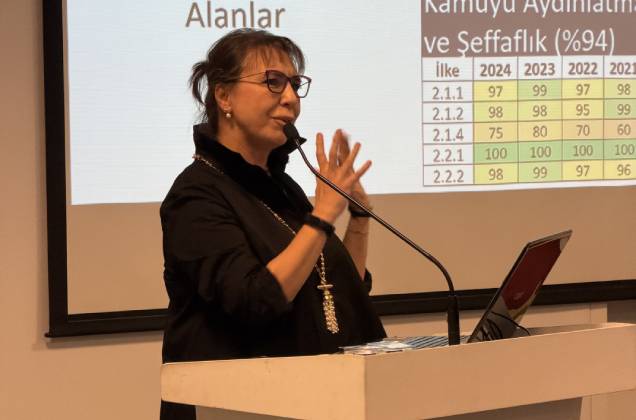
“A Path from Red to Green”
Drawing attention to the guiding nature of the report for companies, Dr. Tevhide Altekin made the following assessment: “We can think of companies’ corporate governance journey as a traffic light system trying to turn from red to green. While rapid progress is achieved in some areas with the impact of regulations, a more careful and gradual transformation is needed, especially in areas such as the board of directors structure.”
A Bridge Between Academia, Civil Society, and Business
The Corporate Governance Evaluation Report makes visible Sabancı University's academic output in the field of corporate governance; it stands out as a concrete outcome of the interaction between the university, civil society, and the business world. The study aims to contribute to the dissemination of good governance principles and the strengthening of a sustainable corporate governance culture.